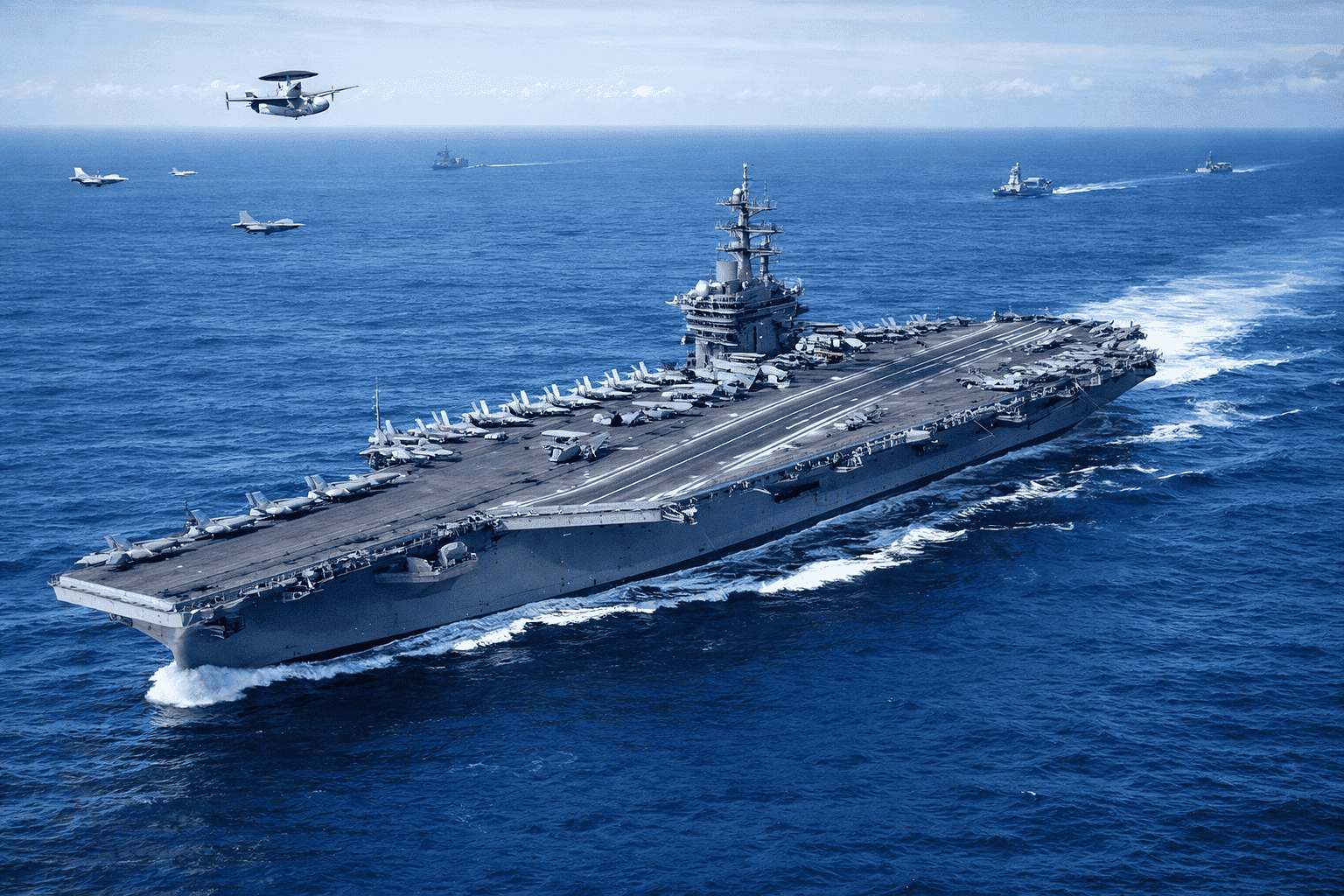
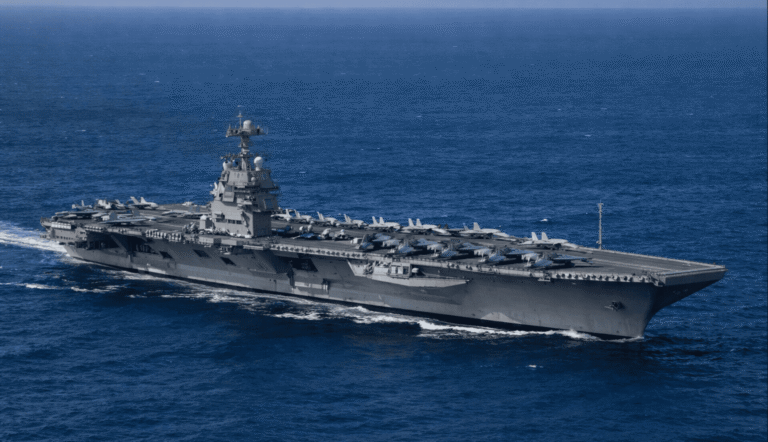
USS Abraham Lincoln (CVN‑72), a US Navy aircraft carrier, demonstrating modern naval technology and aviation systems at sea.
Introduction
USS Abraham Lincoln (CVN‑72) is the one and the most advanced aircraft carriers operated by the United States Navy. It consists modern naval engineering, advanced defense technology and powerful aviation capability. Like a Nimitz class aircraft carrier, USS Abraham Lincoln playing a important role in sea or navy based air operations and global naval presence.
Not same as a ordinary warships, USS Abraham Lincoln (CVN‑72) is designed as a floating airbase. It can recover, launch, and support dozens of aircraft while staying at sea for long periods. This ship combines nuclear propulsion, modern radar, advanced navigation systems and integrated defense systems into one powerful naval platform.
Throughout this article, we will explain the design and engineering structure, nuclear propulsion system, aircraft and aviation technologies, defense and protection systems, and communication and navigation technologies used on USS Abraham Lincoln (CVN‑72). In this explations we will also discuss on its role in modern naval technology and why it is considered a key platform in today maritime operations.
Overview of USS Abraham Lincoln (CVN‑72)
USS Abraham Lincoln is a Nimitz class nuclear powered aircraft carrier which is operating by the United States Navy. It is one of the largest and most complex naval vessels ever built. The carrier is designed to support sea‑based aviation operations, command control, and long‑term deployments.
Key Overview Points
- Type: Aircraft Carrier
- Class: Nimitz‑class
- Operator: United States Navy
- Primary Role: Sea‑based air operations
- Designation: CVN‑72
USS Abraham Lincoln serves as a central platform in carrier strike groups. It supports aircraft operations, logistics, communication, and coordination across large maritime areas. From a technology perspective, the ship integrates aviation systems, power generation, and defense systems into a single operational unit.
Design & Engineering Technology
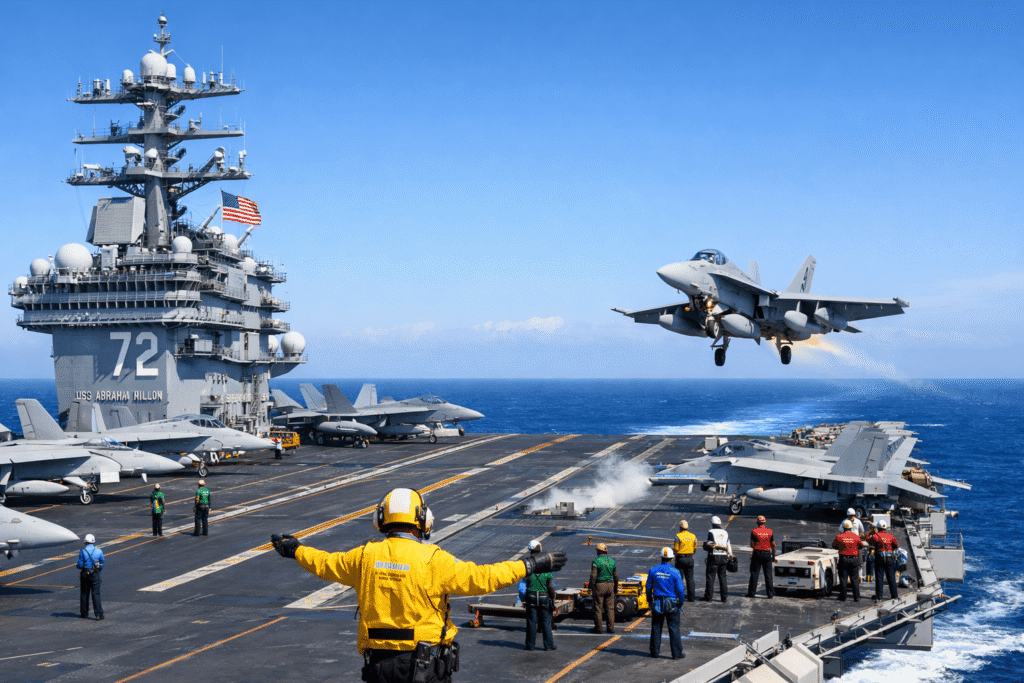
The design of USS Abraham Lincoln (CVN‑72) Showing strength, efficiency and long‑term durability. The ship’s hull is built using high‑strength steel to handle ocean stress, aircraft operations, and extended deployments.
Hull Design
- Optimized for stability at sea
- Designed to support heavy aircraft loads
- Resistant to harsh maritime environments
Flight Deck Layout
The flight deck is one of the most advanced engineering areas of USS Abraham Lincoln (CVN‑72). It is carefully designed to support fast aircraft launch and recovery.
Key features include:
- Clearly marked runways
- Aircraft parking and movement zones
- Safety systems for deck operations
Aircraft Handling Systems
The USS Abraham Lincoln (CVN‑72) using advanced elevators and deck handling equipment to move aircraft efficiently between the hangar and flight deck. The use of this systems reduce time and improve operational flow.
Automation & Control Systems
Modern automation and control systems play a main and important role in the efficient operation of USS Abraham Lincoln (CVN‑72). This advanced technologies are designed to manage complex onboard activities while reducing the need for constant and manual control. One of the key areas supported by automation is aircraft movement, where computer‑controlled systems help coordinate aircraft positioning, deck operations, and hangar management. This improves safety and allows smoother flight deck operations.
Automation is also essential for power distribution across the ship. The Integrated control systems monitors energy flow from the nuclear power plant to various onboard systems, radar, ensuring stable electricity supply for propulsion, communication and living facilities. In these addition, system monitoring technologies continuously track the performance of critical equipment, helping crews identify issues early and maintain reliable operations.
Another important function is damage control automation, which supports sensors and control systems that detect temperature changes, pressure variations, or technical faults. These assist systems crews in responding quickly and efficiently to technical challenges. Overall, automation and control systems significantly reduce crew workload, enhance the reliability of USS Abraham Lincoln as a modern naval technology platform and improve operational safety.
Propulsion & Power Systems
One of the most important technologies aboard USS Abraham Lincoln is its nuclear propulsion system. This system allows the carrier to operate for many years without refueling.
Nuclear Propulsion Technology
- Provides massive energy output
- Supports ship systems and aircraft operations
- Enables long‑term deployment
Long‑Term Deployment Capability
The Long term deployment capability Because of nuclear power, USS Abraham Lincoln can remain at sea for extended periods. This gives it operational flexibility and reduces dependence on fuel supply chains.
Energy Efficiency
The nuclear power system supports:
- Ship propulsion
- Electrical systems
- Radar and communication equipment
- Aircraft launch systems
This makes USS Abraham Lincoln one of the most energy‑independent naval platforms.
Aircraft & Aviation Systems
USS Abraham Lincoln is designed to operate as a floating aviation base, making its aircraft and aviation systems one of its most important technological features. These systems allow the aircraft to carrier and to support air operations over long distances while remaining at sea for extended periods.
Carrier‑Based Aircraft
The carrier supports a diverse mix of aircraft, each serving a specific operational role. These include fighter jets used for air defense and patrol missions, electronic warfare aircraft that support communication and signal control, early warning aircraft that help monitor airspace from long distances, and helicopters used for transport, surveillance, and search‑and‑rescue operations. This combination of aircraft allows USS Abraham Lincoln to perform multiple aviation tasks efficiently from a single platform.
Launch & Recovery Technology
Aircraft are launched and recovered using advanced mechanical and control systems designed for safety and precision. Key technologies include catapult launch systems, which allow aircraft to take off from a limited deck space, and arresting gear, which safely stops landing aircraft in a short distance. In addition, precision landing guidance systems assist pilots during takeoff and landing operations. Together, these technologies enable safe and efficient flight operations even in challenging sea and weather conditions.
Defense & Protection Systems
USS Abraham Lincoln is protected by layered defense technologies that focus on detection, monitoring, and system‑based protection. These systems are designed to support overall ship safety while maintaining a strong technology‑focused approach.
Radar & Surveillance Systems
Advanced radar and surveillance systems provide continuous airspace monitoring, surface tracking, and early threat detection. These systems help maintain situational awareness by collecting and processing data from the surrounding environment, allowing the carrier to operate safely during long deployments.
Missile Defense (High‑Level Overview)
The aircraft carrier integrates missile defense systems that are designed to protect against aerial threats at a general level. These systems works in coordination with tracking, systems, radar and command networks to detect and respond to potential risks. This overview focuses on system integration rather than tactical use, keeping the discussion educational and technology based.
Close‑In Defense Systems
Close range means short range defense systems act as the final protective layer for USS Abraham Lincoln. These automated defense systems are designed for rapid response and high accuracy, providing an additional level of protection around the ship. Their main role or purpose is to enhance onboard safety through advanced detection and response technologies.
⚠️ Note: This section remains purely educational and non‑tactical, highlighting only the technological aspects of defense systems.
Communication & Navigation Technology
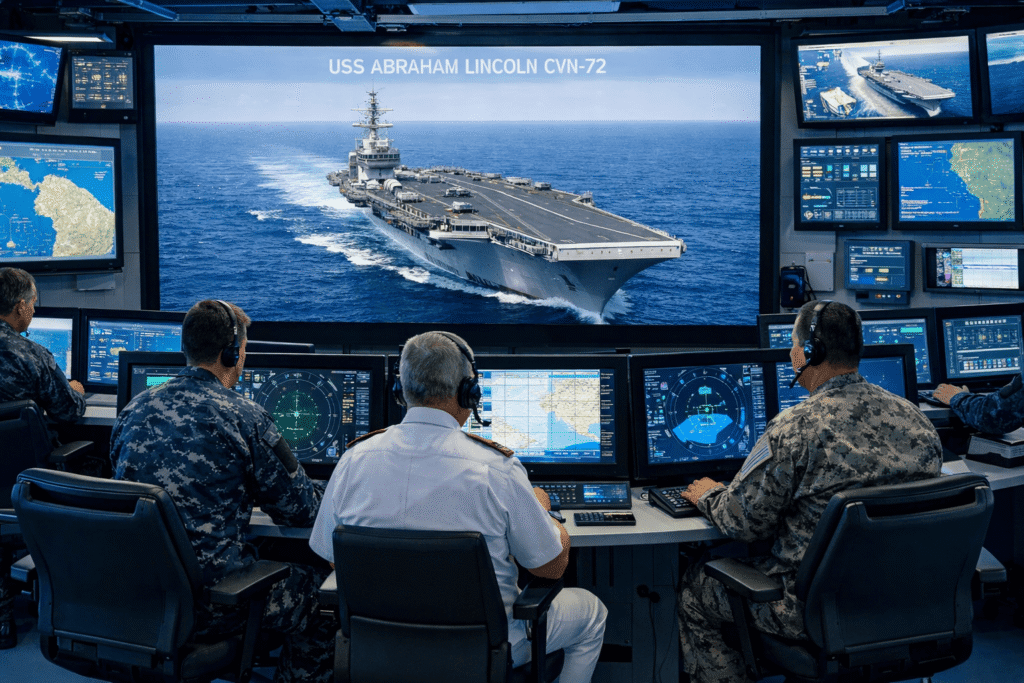
USS Abraham Lincoln uses modern communication and navigation systems to operate safely and smoothly around the world.
Satellite Communication
Satellite systems allow:
- Secure long‑distance communication
- Data sharing with naval fleets
- Coordination with aircraft and support ships
Secure Naval Networks
Encrypted communication systems protect operational data and ensure reliable information flow.
Navigation & Tracking
Modern navigation technology includes:
- GPS‑based systems
- Advanced maritime radar
- Integrated tracking software
These tools ensure accurate movement and safe operations at sea.
Role in Modern Naval Technology
USS Abraham Lincoln represents the concept of a floating airbase. This role allows air operations without reliance on land bases.
Sea‑Based Air Power
The carrier provides:
- Flexible air deployment
- Rapid response capability
- Continuous aviation support
Technology Evolution
Over time, USS Abraham Lincoln has received technology upgrades that improve:
- Electronics
- Communication systems
- Aircraft compatibility
This ensures it remains relevant in modern naval operations.
Why USS Abraham Lincoln Is Technologically Important
USS Abraham Lincoln is more than a ship—it is a symbol of advanced naval engineering.
Key Reasons
- Combines aviation, power, and defense systems
- Demonstrates nuclear propulsion efficiency
- Serves as a platform for testing and training
- Represents innovation in carrier design
From a technology viewpoint, USS Abraham Lincoln sets standards for future aircraft carriers.
Frequently Asked Questions (FAQs)
What is USS Abraham Lincoln?
USS Abraham Lincoln is a Nimitz‑class nuclear‑powered aircraft carrier operated by the US Navy.
Why is USS Abraham Lincoln important?
It is important because of its advanced naval technology, long‑term deployment capability, and role as a floating airbase.
What type of power system does USS Abraham Lincoln use?
USS Abraham Lincoln uses nuclear propulsion, allowing it to operate for many years without refueling.
How many aircraft can USS Abraham Lincoln support?
The carrier can support dozens of aircraft, including fighter jets, helicopters, and support aircraft.
Is USS Abraham Lincoln still modern today?
Yes, USS Abraham Lincoln receives regular technology upgrades to remain effective and modern.
Read More About Military Aircraft
Aircraft carriers like USS Abraham Lincoln is a important of advanced military aircraft. On our website, you can explore detailed articles about fighter jets, aviation technology, and modern military aircraft systems. These articles explain aircraft design, radar systems, engines, and flight technology in simple and easy‑to‑understand language.
Conclusion
We can say USS Abraham Lincoln (CVN‑72) is a powerful example of modern naval technology and the power of US navy. From its nuclear propulsion system to its advanced aviation and defense systems. This carrier shows how technology supports long term maritime operations. Engineer design USS Abraham Lincoln (CVN‑72) and continuous upgrades make it a key platform in modern naval systems.
Like Nimitz‑class aircraft carrier, USS Abraham Lincoln shows strong engineering and modern technology. With These features USS Abraham Lincoln is an important part of naval operations for many years ahead.
For additional and verified information about USS Abraham Lincoln (CVN‑72), you can refer to the official Wikipedia page:
About the Author

1 thought on “USS Abraham Lincoln (CVN‑72): Advanced Naval Technology of a US Aircraft Carrier”