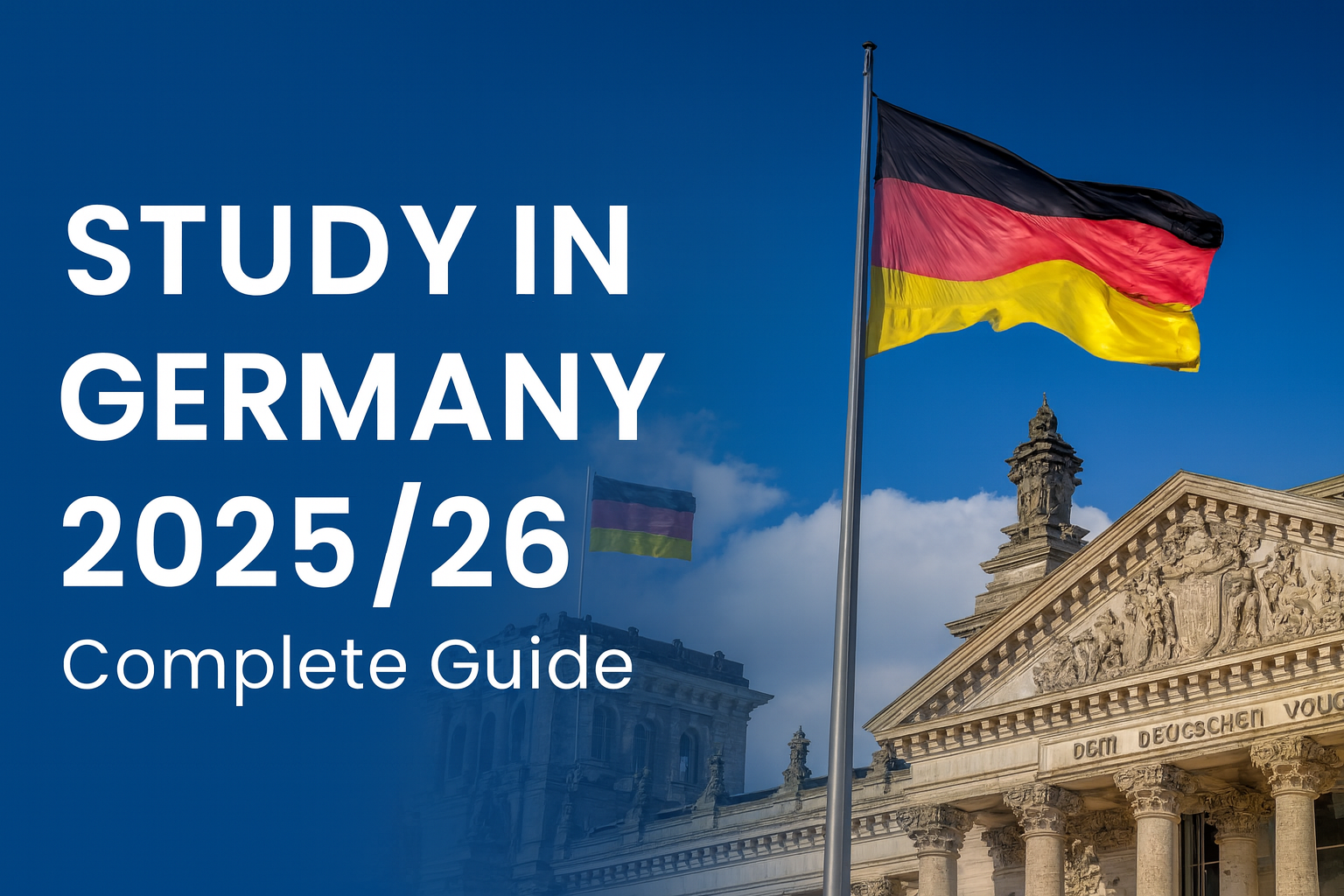
Study in Germany 2025/26 – Free education & complete admission guide for international students.
Study in Germany 2026
Germany is the one and of the most popular for study place in the world. Every year, thousands of students from Pakistan, India, Bangladesh, Nepal, Africa, and the Middle East choose Study in Germany because of free education, high‑ranked universities, and strong job opportunities.
If you are planning Study in Germany in 2026, this complete guide will help you understand everything in simple words. This details covering benefits, requirements, public universities, costs, visa process, jobs, and future opportunities for international students.
What Is Study in Germany?
Study in Germany means getting a Bachelor’s or Master’s degree from German public or private universities. Most public universities in Germany offer no tuition fees, even for international students.
Students only pay a small semester contribution, which makes Study in Germany one of the most affordable education options in the world.
1. Why Study in Germany in 2026?– Benefits for Students

Germany is ranked among the top 5 countries for international students. Here are the main reasons why students prefer Study in Germany:
- Free or very low tuition fees in public universities
- Globally recognized degrees
- More than 2,000 English‑taught programs
- Strong job market after graduation
- Safe, modern, and multicultural society
- Excellent research and innovation system
Compared to the USA, UK, Canada, and Australia, Study in Germany is more affordable and offers long‑term career growth.
Who Can Study in Germany? (Eligibility)
For Bachelor’s Degree
To Study in Germany for Bachelor level, you need:
- 12 years of education (Intermediate / A‑Levels)
- Minimum 60–70% marks
- English or German language proof
- CV and Motivation Letter
For Master’s Degree
For Master’s programs:
- 16 years of education (relevant degree)
- CGPA 2.5+ (higher for competitive fields)
- IELTS / TOEFL or German language proof
- Strong SOP and recommendations
👉 Students from any country can apply for Study in Germany if they meet academic and financial requirements.
2. Language Requirements to Study in Germany 2026
English‑Taught Programs
Most international students prefer English programs.
Accepted tests:
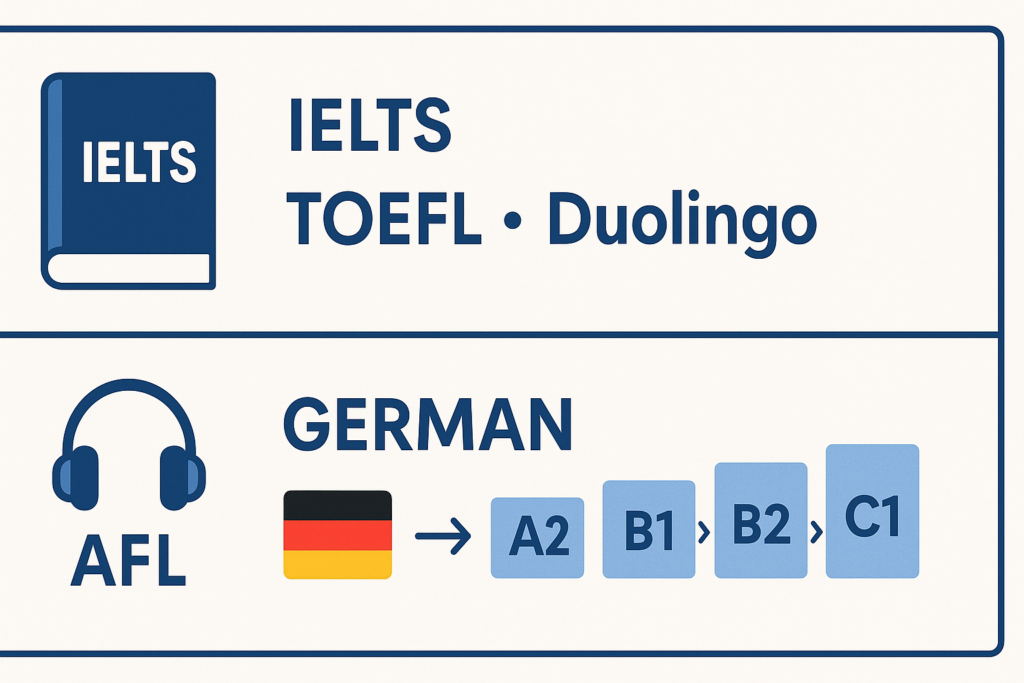
- IELTS in 6.0 – 6.5
- TOEFL iBT into 80–95
- Duolingo 95+ (limited universities)
German‑Taught Programs
If you choose German programs:
- Required level: B2 or C1
- Exams: Test of DaF or DSH
📌 Tip: Learning basic German (A2/B1) helps a lot during Study in Germany, especially for jobs and daily life.
A) English teaching Programs
You need one of the following:
| Test | Required Score |
|---|---|
| Test of IELTS | 6.0 to 6.5 Sometimes 7.0 for competitive courses |
| TOEFL iBT | 80 – 95 |
| Duolingo | 95–110+ (Accepted by some universities) |
| MOI Certificate | Limited acceptance in 2025 |
B) German Teaching Programs
You must study German language details with step by step:
A1 → A2 → B1 → B2 → C1
For admission in German teaching courses, Test DaF or DSH exams are required.
Public Universities in Germany for Free Education
Public universities are the backbone of Study in Germany. They do not have or charge any tuition fees.
below are tops public universities in Germany:
- Technical University of Munich (TUM)
- Ludwig Maximilian University Munich (LMU)
- Heidelberg University
- RWTH Aachen University
- Humboldt University Berlin
- University of Hamburg
- Technical University of Berlin
These universities are highly ranked globally and offer strong research and career support.
Best Cities for Study in Germany in can be face Living Costs
Choosing the right city is very important when planning Study in Germany, because living costs change from city to city. Rent costs, transport, and daily expenses depend heavily on location area. I recommend to Students should always select a city based on budget, university choice, and part‑time job availability.
Affordable Cities (€650–€850 per month)
Cities like Leipzig, Dresden, Chemnitz, and Dortmund are popular among budget‑friendly students. Rent is lower costs, and public transport is also affordable for students. These cities have also good public universities, peaceful environments, and very small housing problems. For students with limited budget, these cities make Study in Germany easier and stress‑free.
Medium‑Cost Cities (€750–€950 per month)
Cologne, Stuttgart, and Bonn fall into the medium cost category. These cities offering strong job marketes, better industry exposure, and with high ranked universities. In small cities Living costs are higher than big cities , but students also find more part time job opportunities for spend on their study expenses. Many international students prefer these cities for balanced Study in Germany experience.
Expensive Cities (€900–€1,300 per month)
Munich, Frankfurt, Hamburg, and Berlin are the most expensive cities in Germany. there, Rent is high cause their to strong demand and limited housing. These cities offer top universities, international companies and links, and better career growth. Students planning Study in Germany in these cities must arrange accommodation early and plan finances carefully.
Total Cost & Blocked Account (2026)
To get a German student visa, financial proof is required.
Blocked Account Requirement
- €11,934 per year (2026)
Monthly Expenses
- Rent: €350–€650
- Food: €150–€250
- Insurance: €80–€160
- Transport & others: €100–€200
👉 Blocked account is mandatory even if you plan Study in Germany with part‑time work.
Part‑Time Jobs During Study in Germany
Part‑time work is a big support for international students during Study in Germany. It helps students manage daily expenses, gain work experience, and improve communication skills. However, students must follow official work rules.
Work Hours Allowed for International Students
International students are legally allowed to work:
- 120 full days OR 240 half days per year
these limit requires special permission from the local authorities. Students always should follow these rules to avoid visa problems during Study in Germany which can makes big problems in their educations.
Average Salary for Student Jobs
The average student income in Germany is:
- €10–€18 per hour
work Salary also depends on the city, job type, and language skills. the number of big cities usually offer higher pay but also have higher living costs.
Common Part‑Time Jobs for Students
During Study in Germany, students commonly work in:
- Supermarkets (cashier, stock helper)
- Cafes & restaurants (waiter, kitchen helper)
- Warehouse helper (packing and sorting)
- Tutor (English, math, or subject‑based tutoring)
- Werkstudent jobs (best for Master’s students, related to field of study)
For student jobs are highly valuable because they provide professional experience and better career opportunities after graduation.
Important Things to Remember
⚠️ Part‑time income helps with living costs, but it cannot replace the blocked account requirement. Students must show full financial proof before visa approval for Study in Germany 2026.
Final Advice for Students
Students should balance work and studies carefully. Too many work hours can affect academic performance. Smart planning helps students enjoy a successful and stress‑free Study in Germany experiencing.
Scholarships for Study in Germany 2026
Germany offering many scholarships options for international students who are worried about their studies and want to reduce study expenses and living costs. These scholarships make Study in Germany 2026 more affordable and possible for students from different financial backgrounds.
DAAD Scholarships (Most Popular)
The DAAD (German Academic Exchange Service) is the largest scholarship provider in Germany. It supports Bachelor (limited), Master’s, and PhD students.
DAAD scholarships usually cover:
- Monthly stipend (€850–€1,200 approx.)
- Health insurance
- Travel allowance
- Sometimes tuition and research support
DAAD is highly competitive, so a strong academic record and motivation letter are very important for Study in Germany 2026.
Erasmus+ Scholarships
Erasmus+ is mainly for exchange students and some Master’s programs.
It offers:
- Monthly financial support
- Travel allowance
- Study opportunity in more than one European country
This program is ideal for students who want international exposure during Study in Germany 2026.
University‑Based Scholarships
Many German public universities offer their own scholarships based on:
- Academic performance
- Financial need
- Social or personal background
Examples include merit scholarships, tuition support, and one‑time financial aid. These scholarships are easier to access after starting Study in Germany.
Foundation & Merit Based Scholarships
Germany also has private and political foundations that support talented students, such as:
- Heinrich Böll Foundation
- Friedrich Ebert Foundation
- Konrad Adenauer Foundation
These scholarships focus on:
- Academic excellence
- Leadership skills
- Social involvement
They provide monthly stipends and long‑term support during Study in Germany 2026.
Important Tips for Students
✔ Apply early
✔ Write a strong motivation letter
✔ Maintain good grades
✔ Show clear career goals
Final Note
Scholarships less financial pressure and allow for students to focus on learning and career growth. With proper planning and effort, Study in Germany can become affordable and achievable for many international students.
study in Germany 2026 Student Visa Process (Step‑by‑Step)
To Study in Germany, follow these steps:
- Secure university admission
- Prepare academic documents
- Arrange blocked account
- Get health insurance
- Apply for student visa
- Attend visa interview
Visa processing time: 6–12 weeks
Official visa information (ONLY official link used):
👉 German Embassy Pakistan
The Demand of Courses in Germany 2026 to 2030
Germany has high demand for skilled professionals.
Top courses for Study in Germany 2026:
- Engineering (Mechanical, Electrical, Civil)
- Computer Science & AI
- Data Science
- Renewable Energy
- Healthcare & Nursing
- Business & Economics
These fields offer better jobs and PR chances.
Job Market & PR After Study in Germany 2026
After graduation:
- 18‑month job search visa
- Average salary: €35,000–€55,000
- PR possible after 21–33 months
This makes Study in Germany 2026 a strong long‑term decision.
Ausbildung in Germany (Alternative Option Study in Germany 2026)
Ausbildung is a vocational training program.
- Paid training + study
- Monthly salary
- Strong job security
- Popular fields: IT, healthcare, hospitality
Many students choose Ausbildung instead of traditional Study in Germany 2026.
FAQs About Study in Germany 2026
Is Study in Germany free?
Yes, public universities offer free education.
Is Germany good for international students in Study in Germany 2026?
Yes, Germany is safe, modern, and welcoming.
Can average students study in Germany 2026?
Yes, with proper planning and profile.
Conclusion: Should You Study in Germany in 2026?
Yes, absolutely!
Study in Germany 2026 offers:
- Free education
- Global degree value
- Strong job market
- PR opportunities
- Affordable living
For students who want quality education with low cost and a bright future, Study in Germany 2026 is one of the best choices in the world.
For more about education update for international students , universities admission visit my education page
About the Author

Related posts:
 Ausbildung in Germany 2026: Requirements For Students
 Best & Affordable Public Universities in USA for International Students 2026
 Best 7 Public Universities in Pakistan – HEC Recommended
 The University of Southern Mississippi Admissions 2026 Open| Exciting Opportunities for Students
 National Bank of Pakistan 2026 – How to Apply, Eligibility, Salary & Careers
 Public vs Private Universities in Pakistan – Which Is Better?


Great job..
Great ..
Grodity, thanks for information. You are very helpful in my future planning.